Charity advertising has always understood the power of emotion. One story and one face can turn an abstract issue into a personal one. Evoking a strong emotional response is evidently a powerful tool for fundraisers, but we need to think more about how we use these emotional appeals.
Across the third sector, conversations around representation, consent and lived experience have moved on. The question is no longer whether emotion has a role in charity advertising. Of course it does. The better question is how we evoke that emotion, who helps shape the campaign and whether it serves the people closest to the issue as well as the people it asks to donate.
For decades, effective campaigns have relied on powerful case studies to drive home a message. Someone’s trauma or hardship becomes the bridge between the public and the cause. In the traditional sense, it often works. But as campaigns run across an ever evolving range of channels, the role of the person at the centre of the story needs to evolve too. Their experience should help shape the work from the beginning.
Campaign measurement is no longer purely about money raised or awareness. Increasingly so, we need to look at who collaborated on the narrative, who benefited from it and who could have been harmed or misrepresented by it.
The difference is all in the planning. If a case study sits separately from the rest of campaign planning, the person at the centre of the story has limited room to shape how their experience is represented. Their role becomes illustrative, not participatory. This is where the responsibility begins.
Where the risks emerge
Shock creative and overt suffering-led imagery are where the risks become most obvious. These approaches can misrepresent people affected by the issue, reducing them to passive victims rather than individuals with agency, context and complexity.
Change has already been demanded across the UK charity and advertising landscape. Bond updated its ethical storytelling guidance in 2024 to reflect changes in the third sector and the wider media world, with a focus on dignity, consent and duty of care. CharityComms has also placed emphasis on dignified storytelling and how images and language shape perceptions of people “in need”.
Charities have the difficult job of balancing accountability to donors and beneficiaries. Because of this, creative executions must also strike the correct balance between representation and response. When it comes to media, we are often measuring campaigns in response metrics rather than beneficiary dignity. But representation and response aren’t two opposing forces. Together, they make campaigns stronger.
The strongest charity advertising focuses more on action and possibility than suffering.
In an ever-changing media landscape, we need to revisit the ethics.
Charity advertising no longer lives in a closed media loop. In the past, a charity ad might have been a TV spot, a press ad or a poster. These channels are not without risk but are more fixed and easier to contextualise than today’s multi-touch media journeys.
Today, that debate has to include the media system around the image. Each channel does not affect people in the same way. Context, frequency, targeting and journey design all change the emotional experience of the campaign.
Let’s think about digital. Digital does not mean campaigns operate without limits. In the UK, data use and targeting are rightly subject to strict rules. But digital does change how emotional creative is encountered. The same campaign can appear across social, video, display, search and email, each with a different level of exposure.
This makes planning more than a media-efficiency decision. In sensitive categories, planning becomes part of the responsibility of the campaign.
And what about measurement? Conversion rate, awareness and reach will always matter, but they are also incomplete. Affected-person feedback, helpline demand, complaints and other responsibility metrics are deeply important safeguarding techniques, but also genuinely valuable tools to increase brand trust and improve upon your campaigns.
A campaign can hit every KPI and still fail those at the heart of the issue.
From representation to participation.
The best charity advertising is happening when campaigns are shaped with those affected by the issue. They bring the nuance, accuracy and lived understanding that no external brief can properly replicate.
Lived experience should form part of every step of the campaign planning – design, delivery, evaluation and reporting. By incorporating this ethos, you ensure that lived experience is more than decorative.
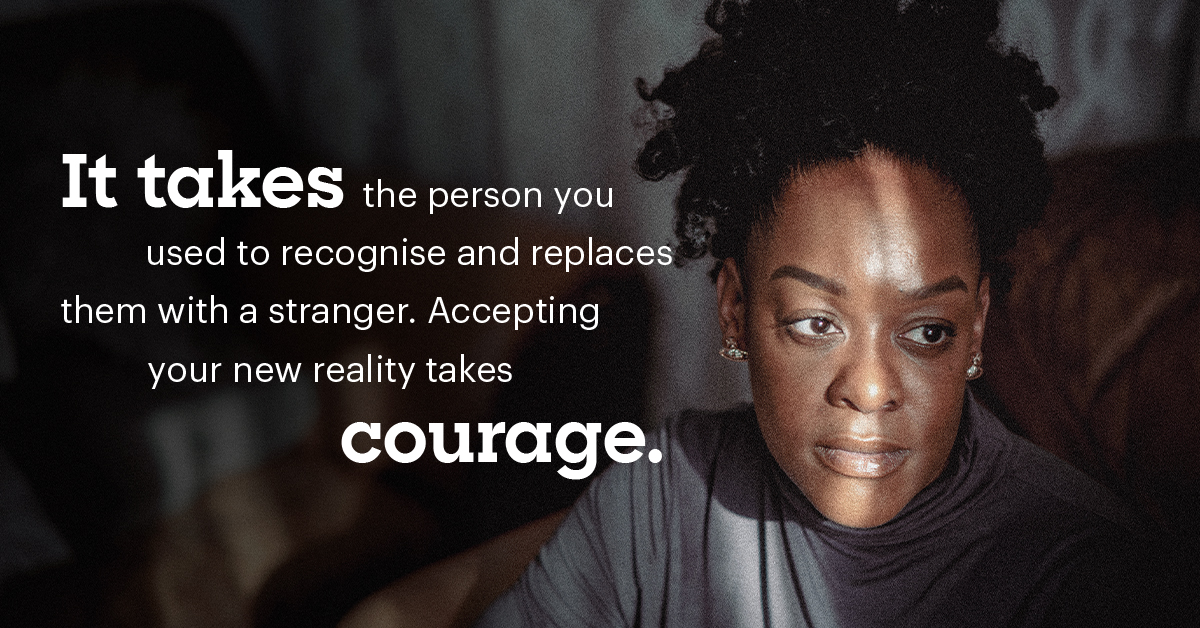
A campaign that does this well is Blood Cancer UK’s ‘We Know What It Takes’. It was developed with people affected by blood cancer – they informed the creative and planning to best reflect the harsh realities of dealing with blood cancer, without creating a sense of over-victimisation, compassion fatigue or stereotyping.
The campaign also reflects the importance of action and possibility. The copy does this perfectly by highlighting Blood Cancer UK’s research and support ensuring the campaign doesn’t leave the audience, especially those affected, feeling alienated or hopeless.
Cats Protection’s ‘Lifeline’ is another great example because it connects emotion to a practical service. The campaign deals with domestic abuse, but it does not simply use trauma to generate sympathy. It explains that many people cannot leave safely if they fear what will happen to their cat, and gives the audience a practical role through donating, fostering or learning more about the service. In sensitive categories, that sense of possibility and action is what makes the media journey feel more responsible.
Charity advertising will always need emotion.
But emotion is earned through consent, truth and care for the people represented. The future is campaigns where affected people are respected and involved at every step. A campaign should serve them as much as it does the people it asks to donate.