AI is transforming search from a channel that finds information into one that shapes decisions. As AI assistants and Google’s AI Overviews increasingly determine what consumers see, brands must compete not just for rankings, but for recommendation.
The winners will be the brands that invest in improving their AI visibility and authority now as search evolves from a click-driven model to an answer-driven one.
We’re all using AI
Like it or not, it is impossible to think about Search these days without the spectre of AI looming over your shoulder. I’m sure it doesn’t come as a surprise to you when I say that AI assistants are changing how consumers find and research products and services – they were the fastest growing web category in 2025.
Within usage of these assistants, we see several key behaviours:
- 77% of active AI users have used AI assistants to discover a product or brand
- 88% of active AI users have used an LLM answer to compare different options
- 44% of searches are branded, showing users already have products/services in mind
- (source: WARC & Verdane, Europe)
So what does it mean for advertisers?
What this means for advertisers is 3 core things:
- You need to have visibility within AI answers for people to discover you
- When you are mentioned, you need to be mentioned positively and against the topics that are most relevant to you.
- Upper funnel activity becomes more important, in order to get you front of mind before a search even starts and to reduce comparison behaviour
The effect of this change in behaviour is further compounded by Google’s roll out of AI Overviews (AIOs), where users have essentially had the decision of whether to use an AI assistant or not taken out of their hands as these answers are automatically incorporated into the SERP.
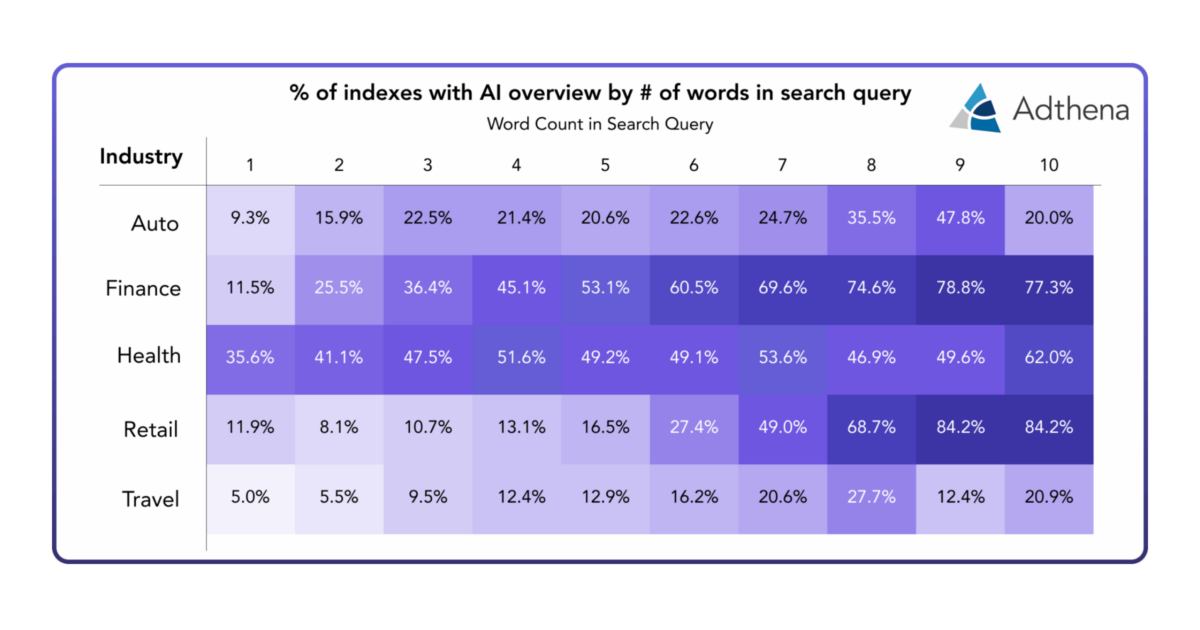
Adthena ran a study last year, looking at AIO coverage across various verticals and found that up to 84% of queries in some cases were prompting an AIO in response:
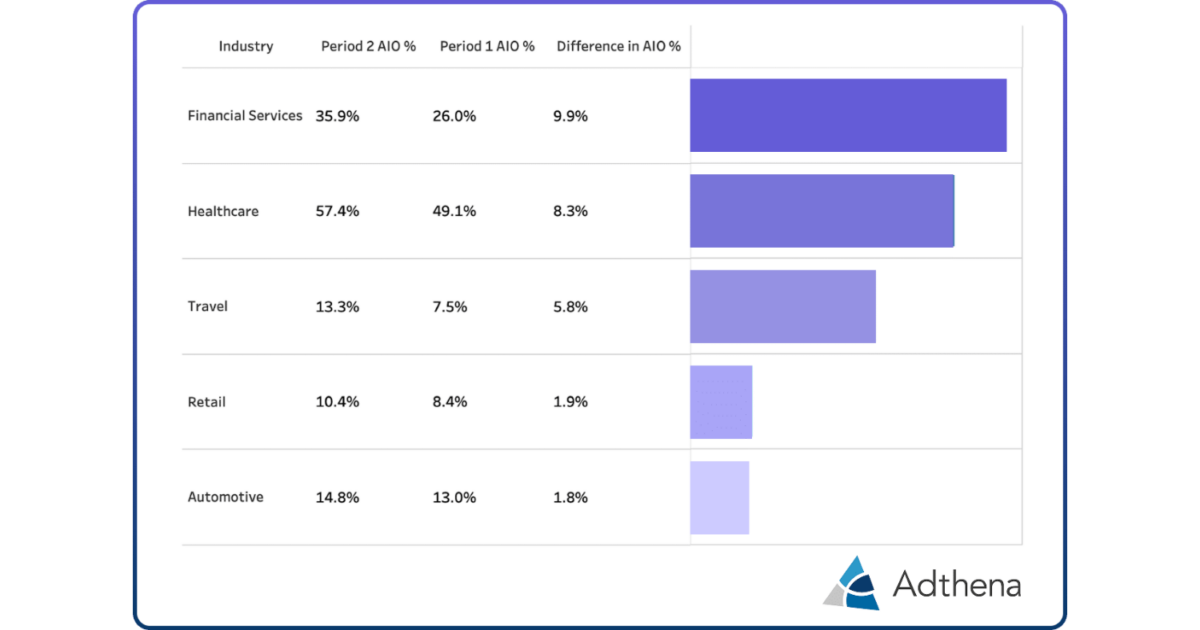
We also see this coverage increasing over time (this data shows two periods, Apr-May versus Aug-Sept 2025):
Answer Engine Optimisation – AEO
With Google’s announcements around updates to the search box at their I/O developer conference at the end of May, I would only expect this to continue and grow.
At the moment in the UK, these AIOs are completely organic. If an ad shows on the SERP, it either appears above or below the answer. We are expecting ads to come into the AIOs, which would then allow us to mitigate poor organic visibility with paid activity in the same way we have for standard SEO in the past, but for now if your organic visibility and sentiment aren’t strong, this may be negatively impacting your performance.
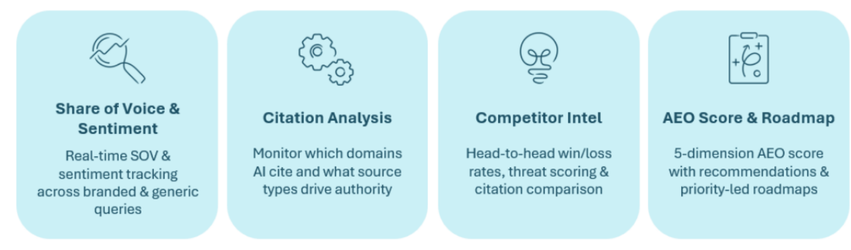
This is where AEO (Answer Engine Optimisation) comes into play. At JAA we work with our partner Semicolon to deliver a platform called Signal360 that we use to track visibility, benchmark against competitors and build a roadmap for AI answer dominance.
We integrate the platform with your own data through Google Search Console and GA4 in order to correlate AI visibility with actual traffic and conversion impact. Through this integration, plus tracking the AEO score on the platform, we can measure the impact that the changes we make have on improving performance.
For years, search strategy has focused on winning the click. Increasingly, the challenge is winning the answer.
In Summary
Whilst it’s still early days, the direction of travel is clear. AI assistants are growing rapidly, AI Overviews are becoming more prevalent, and new ad opportunities within these environments are on the horizon. Brands that start understanding and improving their visibility now will be in a much stronger position than those waiting for traffic declines to force action later.
The question is no longer whether AI will impact search behaviour. The question is whether your brand is showing up when those conversations happen.
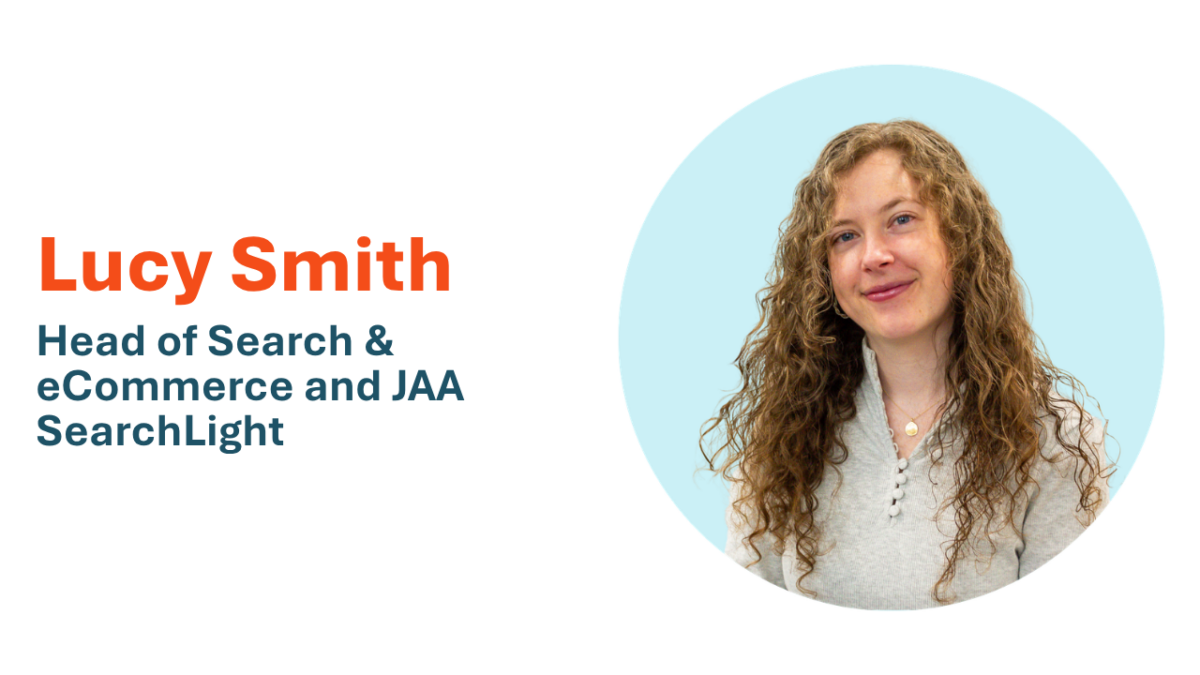
- Contact Lucy:
- Searchlight@jaa-media.co.uk
- +44 207 439 6070