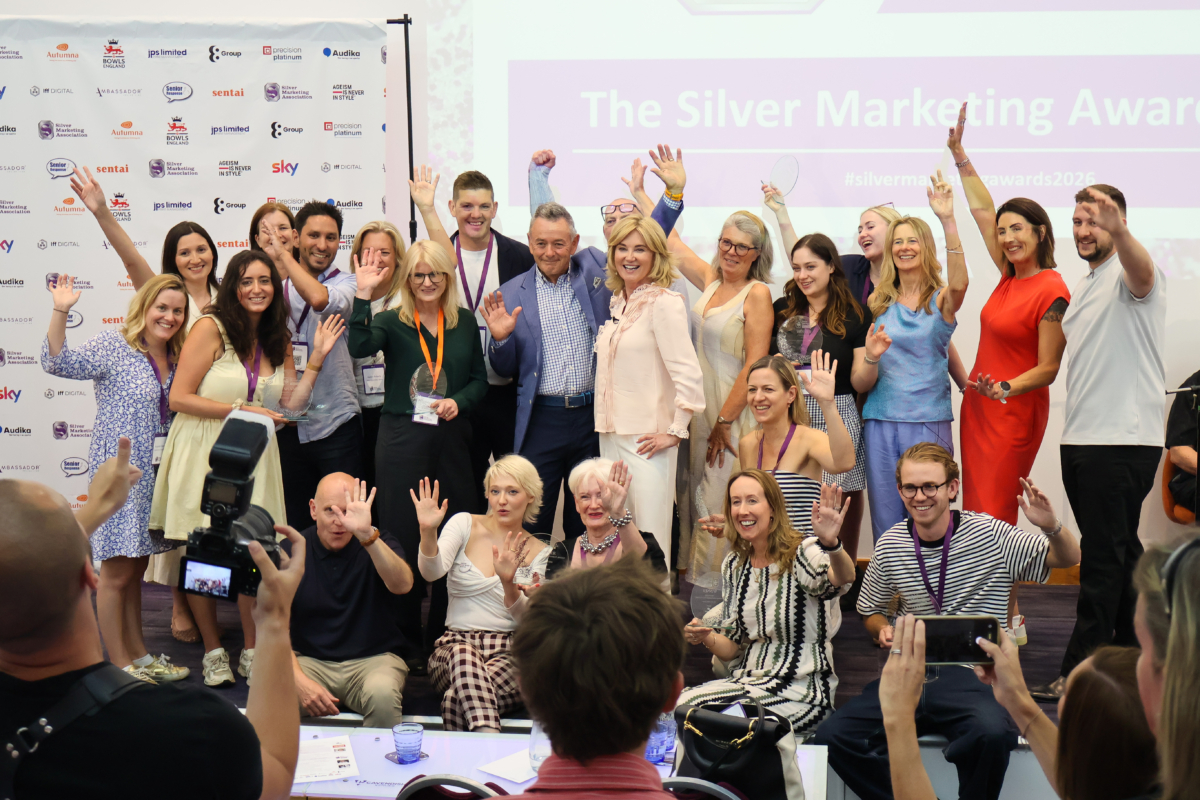
The Silver Marketing Summit brought together speakers from across media, retail, technology and research to talk about one of the UK’s most overlooked consumer groups: the over-50s. Here’s our key insights from the day…
Stop marketing to age. Market to life stage.
The single biggest takeaway from the summit was also the simplest: the over-50s aren’t one audience. Someone in their early 50s juggling work and ageing parents is in a completely different life moment to someone in their 70s who retired a decade ago. As Avivah Wittenburg-Cox and Jacynth Bassett put it in the opening talk, getting this right “takes will and skill.”
The panel was clear about where brands typically go wrong: tokenism, stereotyping, and bundling everyone 50+ into a single bracket. Older audiences often have internalised age bias themselves, meaning they actively reject products and ads that are visibly targeted at their age group. A Schwarzkopf ad featuring an older woman on a mobility scooter was cited as an example of the wrong approach. John Lewis’s 2010 Always a Woman ad was held up as the standard to aim for. Diverse, nostalgic and honest, reflecting real, multi-faceted lives rather than a stereotype.
The fix is to segment by behaviour, not birthday, and to avoid stereotyping or tokenism at every stage of the creative process.
Trust still wins
Across several talks, one theme kept resurfacing. In a crowded media landscape, the channels that build trust are winning attention from this audience – and they’re not always the obvious ones.
Radio, podcasts, direct mail, print and addressable TV all came up as trusted environments. Boom Radio’s David Lloyd described radio as “the best thing next to word of mouth”, whilst Saga’s Louise Robinson called podcasts “a very cost effective channel” for reaching engaged, older listeners.
Print and direct mail got just as much attention. Penny Worthy of Silver Travel Advisor pointed out that content is physically harder to read on screens. There’s no anchoring, and people don’t tend to read long-form content online. A printed magazine, by contrast, is tangible, often having been part of someone’s life for decades. Clair Atkins of Our Media added that direct mail stays in the home for 7–8 days on average and is one of the most trusted media formats, ahead of both OOH and TV. And in turn, contributing to around 30% of a person’s buying decision.
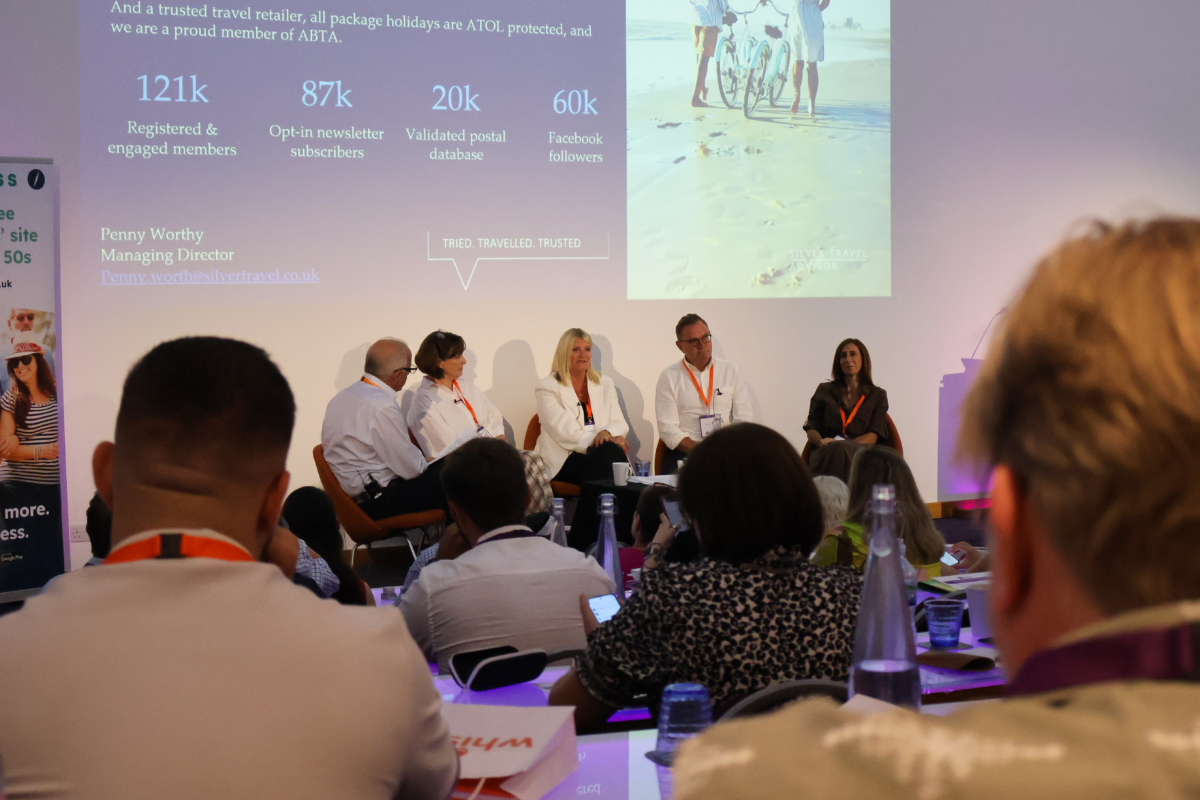
Door drops came up as a particularly strong – and underused – format. Susie Idle from Whistl shared a Waitrose case study showing a £6 ROI, with 72% of the door drops read. Because they carry no name or address, they’re also discreet. This matters to an audience that’s often wary of how its data is used. Plus, this is a key channel in which to target the sandwich generation, the ones making the decisions for their elderly parents.
As Susie put it: “door drop opens the door, digital lets them in.” Digital still matters. But for this audience, trusted environments matter more.
People, not platforms
A line from the Paper, Bricks & Mortar panel stuck with the room: “look at the people before the platform.” Media planning for this audience should start with behaviour, not assumptions about what a 60-something or 70-something “should” be doing. The best campaigns in this space utilise a media mix across the customer journey, rather than betting everything on one format.
Don’t write off digital
It would be easy to conclude from all of the above that the silver audience is analogue-first. It isn’t. The “silver audience” is more digitally engaged than most marketers assume.
TikTok’s Debbie Benjamin shared that 1 in 4 over-75s who are online have engaged with the platform, and that 73% of users said they felt happier after visiting it. Reddit’s Merson Lewis pointed out that the 55+ audience is Reddit’s fastest-growing segment. And that travel – a category this audience over-indexes on – is the platform’s fastest-growing subsector. Reddit is searched 150 times a second, and Merson noted it’s now the most cited source by LLM’s globally.
Add to that a fast-growing appetite for YouTube-on-TV and rising smartphone adoption (55–75 year olds are reportedly the fastest-growing demographic of smartphone users), and a clearer picture emerges. This audience is online, but it wants platforms and content that respect its intelligence.
AI has a bias — and an opportunity
One of the most debated sessions of the day tackled AI head-on, with speakers taking opposing but complementary positions.
Frank Leyhausen argued that AI, as it stands, is ageist. He pointed to “aggregation bias”. Most datasets treat 55+ as a single, open-ended bracket that can span nearly 60 years, compared with the neat 10-year brackets used for younger age groups. The consequences show up in hiring, in credit and healthcare scoring, and in how older people are generated or represented in AI images. His call to action? Raise awareness of digital ageism, invest in digital literacy within HR and marketing teams, and make sure older people are involved in co-creating the AI tools that will represent them.
Amanda Forsyth made the case for AI as opportunity. Done responsibly – transparent, with mental health safeguards, and always visible as AI rather than disguised as human – it can offer “discovery without overwhelm,” surfacing the right resource at the right time. Her company LivOn positions itself not as a chatbot, but as a personalised guide for retirees, built on the principle that “trust is the product; everything else is a feature.” As she put it, “the gap between access and engagement is where the real opportunity lives.”
Fashion and retail: brand and performance need each other
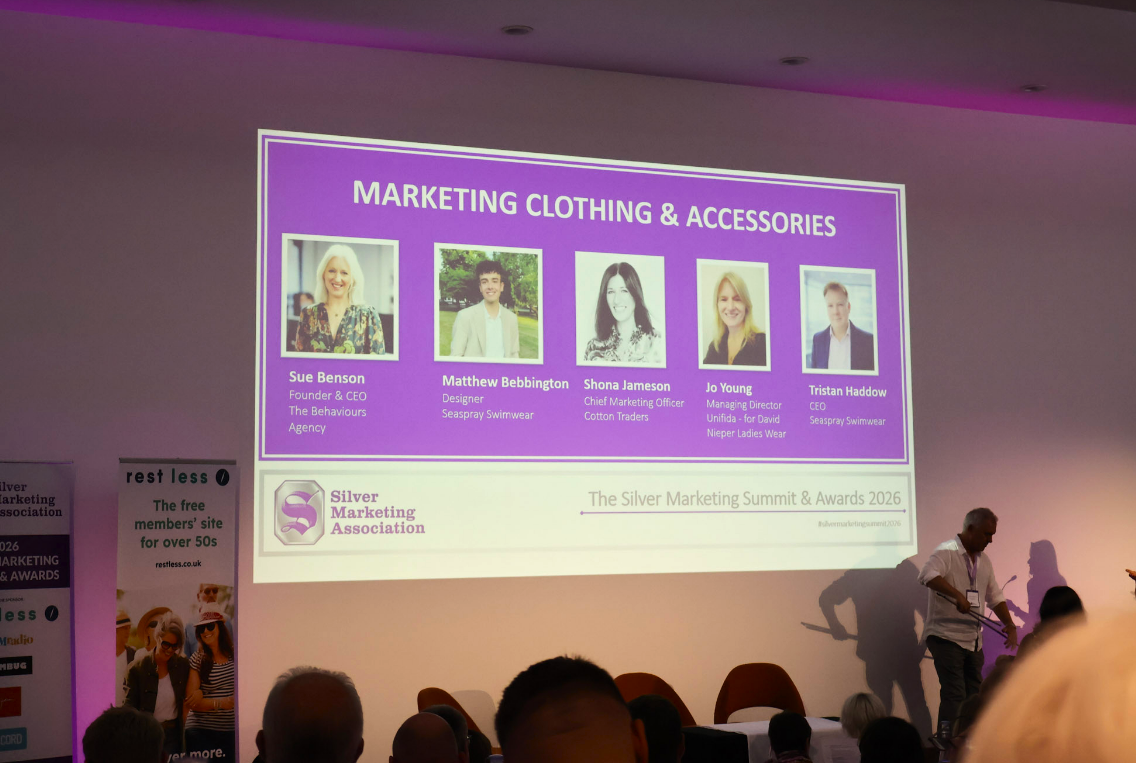
The panel on clothing and accessories brand marketing offered a useful reality check for anyone weighing brand spend against performance spend. The sweet spot? According to the panel sits at roughly 60% brand to 40% performance.
Cotton Traders’ Shona Jameson shared that whilst the brand’s prompted awareness was strong, motivation to buy sat at only 15% – a signal that awareness alone doesn’t convert. The brand shifted from a historically menswear-led, DRTV-heavy performance strategy to a more rounded approach. This included a regional test backed by ITV and a recurring Full of Surprises campaign built around a clear brand hook.
Seaspray Swimwear’s Tristan Haddow pointed to influencer investment – particularly around cruise audiences – as a strong, targeted engagement driver. Unifida’s Jo Young summed up the common thread across all three brands: keep testing, stay agile, and challenge your own assumptions, because nothing in fashion marketing stays the same for long.
Dragon’s Den
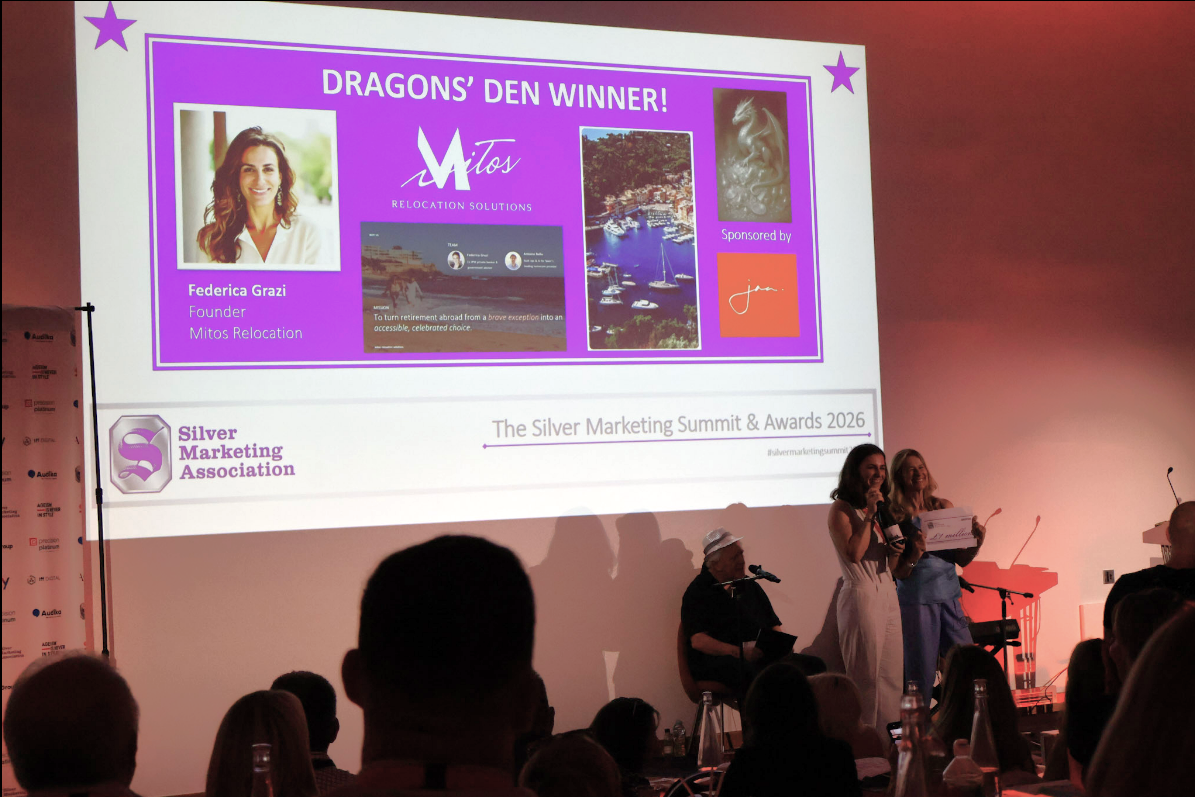
Chaired by JAA’s own Caroline Ayling, the popular Dragons’ Den session returned, where four entrepreneurs battled it out for a share of a fictional £1m marketing budget. The “Pitchers” were Amanda O’Brien, Founder of The Boutique Adventurer; Martin Lock, Founder of SellBuy; Federica Grazi, Founder of Mitos Relocation; and Ken Valledy, Founder of The Great Escape.
Federica came out on top as the winner, as voted for by the Summit audience, pitching her specialist relocation service helping retirees move abroad with confidence. Recognising a gap in the silver economy, Federica founded Mitos to provide tailored, end-to-end support for people seeking a new chapter overseas, taking the stress out of international relocation so clients can focus on enjoying their retirement.
Marketing to mid-life men means earning attention, not demanding it
A dedicated session looked at mid-life men – a group Annie Coleman described as being in “not the decline years, but the design years.” These are men actively curating what they see and skipping ads that feel inauthentic or that don’t reflect how they see themselves.
The panel’s advice: segment by interest, not age. Men in this life stage tend to go deep on specific hobbies and interests (in contrast to a broader, lifestyle-led approach that resonates more with women in the same age bracket). They respond to humour used well – when it lands, it creates a disproportionate sense of being seen and understood. Trusted influencers on platforms like Facebook, Substack and podcasts play an outsized role, as does self-identification. Giving people the useful information they need, without pigeon-holing them as an old audience.
The biggest opportunity? Make your workforce look like your customer
The closing keynote, from 55/Redefined’s Lyndsey Simpson, tied the day together. Her organisation hired 400 out-of-work bankers in the 45–65 bracket and found an almost 1-for-1 hit rate. Many admitted their biggest regret was retiring in the first place. For a lot of older people, retirement brings boredom, a sense of invisibility, and a loss of purpose, and that mismatch is showing up in how brands talk to this group.
Her challenge to the room: skew your organisation’s workforce to better mirror your customer base. It’s the most direct route to understanding this audience properly, rather than marketing to it from the outside.
Our biggest takeaway
The silver market isn’t niche. It’s influential, engaged and evolving fast – across trusted traditional formats and digital platforms alike. Brands that continue to market to this group with outdated assumptions risk missing one of the UK’s biggest consumer opportunities.
What was your biggest marketing takeaway this year? Let’s discuss.
#TheUnderdogAdvantage