A few weeks ago saw the first effectiveness event from the Alliance of Media Independents (AMI), “Packing a Punch.” The morning focused on championing effectiveness specifically for the challenger brands that independent agencies live and breathe.
It was a refreshing take. A common (and fair) critique of industry research is: “Yes, but that data set is dominated by global behemoths – does it actually apply to me?” An event dedicated to the specific hurdles facing challengers is long overdue.
Many of the headlines will be familiar, but the standout for me was the evidence from Peter Field’s work with Newsworks, Karen Nelson-Field & Adam Morgan.
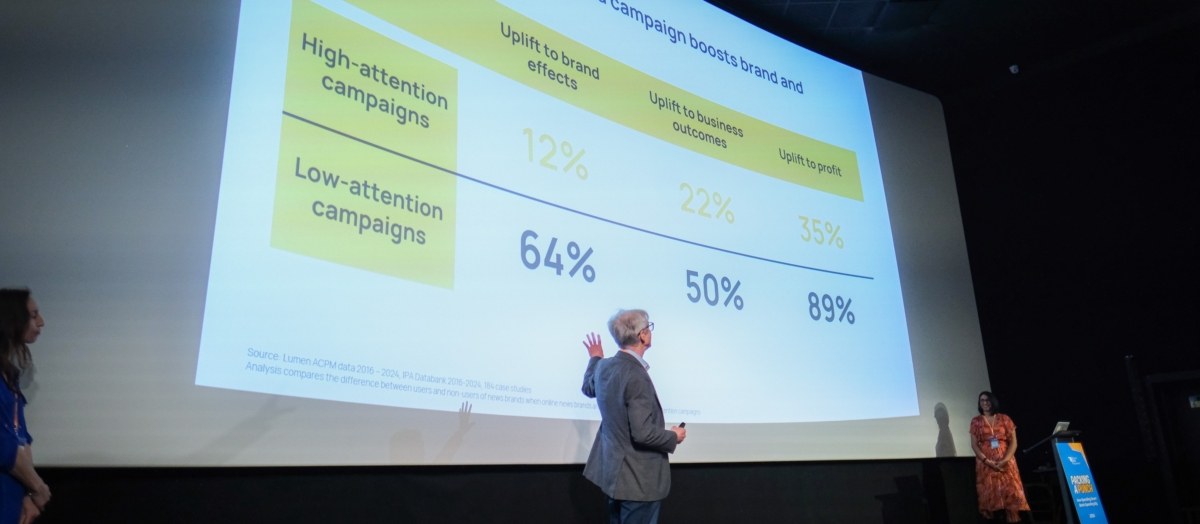
The Attention Deficit
For challenger brands, the gap between high- and low-attention media is brutal. Research shows a 3x drop-off in effectiveness compared to larger brands when attention is low.
This makes sense. Larger brands enjoy high levels of mental availability, rich networks of thoughts, feelings, and associations that spring to mind instantly. Low-attention media can trigger these existing associations, refreshing memory structures and often driving a sale. But low attention does very little to build those structures.
For smaller brands, where associations are weaker or non-existent, low-attention channels have less or nothing to trigger. This explains the massive effectiveness deficit. The cruel irony is that the channels with the lowest barriers to entry are often those with the lowest attention metrics.
The Challenger Playbook: What Can We Do?
As Peter Field implored on the day, challengers should prioritise higher-attention channels, deploying at least 60-70% of their budget there, even if that means sacrificing bottom line CPM.
But beyond this there are several key principles to follow.
1. Select Specific Buying Opportunities
Big brands stay big because they come to mind across a vast range of buying occasions Category Entry Points (CEPs). A key part of the Guinness success story over the last decade is undoubtedly their success in claiming “warmer weather” as a new buying occasion.
Own a top spot: Being the 3rd or 4th brand on a mental shortlist of brands for ten different CEPs leads to missed sales. Being the number one brand for just one or two specific occasions is likely to be more effective.
The much-lauded Liquid Death is a perfect example. They didn’t try to be “water for everyone.” They targeted the “socializing while sober” and “alternative lifestyle” CEPs with aggressive focus.
2. Build and Exaggerate Distinctiveness
If the core task of the communication is build and refresh a rich set of associations that improve the chances of a brand being recalled first, then a strong set of distinctive brand assets will help a challenger not to just be different, but unmistakable. Challengers can’t afford “subtle.” Every touchpoint needs to scream a brand’s personality so that even a fleeting moment of attention leaves a mark.
Sound and advertising characters are 2 of the most effective but least used of these assets and therefore a key opportunity for smaller brands to have disproportionate impact.
3. Be Comfortable Doing “Nothing”
By “nothing,” I don’t mean inactivity, I mean resisting the urge to reset. The “marketing fatigue” felt by an internal team happens far faster than it does for the consumer.
Continuity is a powerful weapon, research by System 1 found that concerns over “wear-out” were largely unfounded and that even average adverts could become more effective over time as the audience became more familiar with the asset.
Challengers often kill great campaigns or visual identities just as they are starting to build those crucial memory structures. Real effectiveness comes from the bravery to stay the course and let your brand equity compound over time.
JAA thrives on working with challenger brands with an underdog approach, mentality and swagger. We help brands do more with less, be that budget, time or resources. We help brands facing adversity with our agility and innovation. For us it is never about the size of the budget but the scale of the ambition.