As streaming continues to reshape viewing habits, AV Planner Buyer Mike Mernin explores why TV isn’t disappearing, but evolving, and what that means for advertisers navigating an increasingly converged video landscape.
I’ll put my hand up, the amount of time I watch live TV has definitely declined. Like most people my age, my evening viewing is a mix of streaming and live sport. The scheduled broadcaster content is no longer the anchor of my generation’s viewing habits. But that doesn’t mean TV is dying. It means TV has moved, and the companies driving that move deserve credit for this. CTV is now a valuable part of the landscape alongside VOD & Linear and our key partners there.
Let me start with the numbers, BARB’s latest Establishment Survey data shows that 20.8m UK homes (70.3%) had access to an SVOD service in Q1 2026. That’s not a niche behaviour, that’s a majority choice. And crucially, the ad tiers are growing fast. Netflix’s ad tier now sits at 7.2m UK homes (24.4%), up 50% year-on-year. Disney+’s ad tier has reached 2.8m UK homes, up 68% year-on-year. Ad-supported streaming isn’t a compromise anymore, it’s becoming the dominant model.
So, who’s doing this well?
Netflix is quietly becoming one of the most powerful advertising environments in the market. Premium content, low ad clutter, and high attention. As its ad element matures, it doesn’t just compete with broadcasters, it’s redefining what premium video means.
Amazon is playing a uniquely different game. Prime Video isn’t just content focused, it’s a gateway into an ecosystem where what you watch connects to what you search and what you buy. Nobody else in the market has the ability to replicate this currently.
Disney+ sits on arguably the strongest IP portfolio in the world, and the way they’re now managing it is very smart. Take Rivals, their biggest UK cultural moment in years. Season 2 has been split into two six-episode releases, the first debuting in May and the second following later in the year. That is a deliberate strategy to create sustained conversation, anticipation and returning audiences. It’s event television, and a signal that Disney+ understands something fundamental; that in a market with an abundance of content, scarcity can be powerful.
HBO Max continues to lean into its prestige content over scale. The cultural impact of the household names of series they have in their arsenal puts them toe-to-toe with any other player in the market. For the right advertiser, that cultural weight is invaluable. This shows how they value quality of attention over quantity of eyeballs.
The Battle for Attention Has Moved
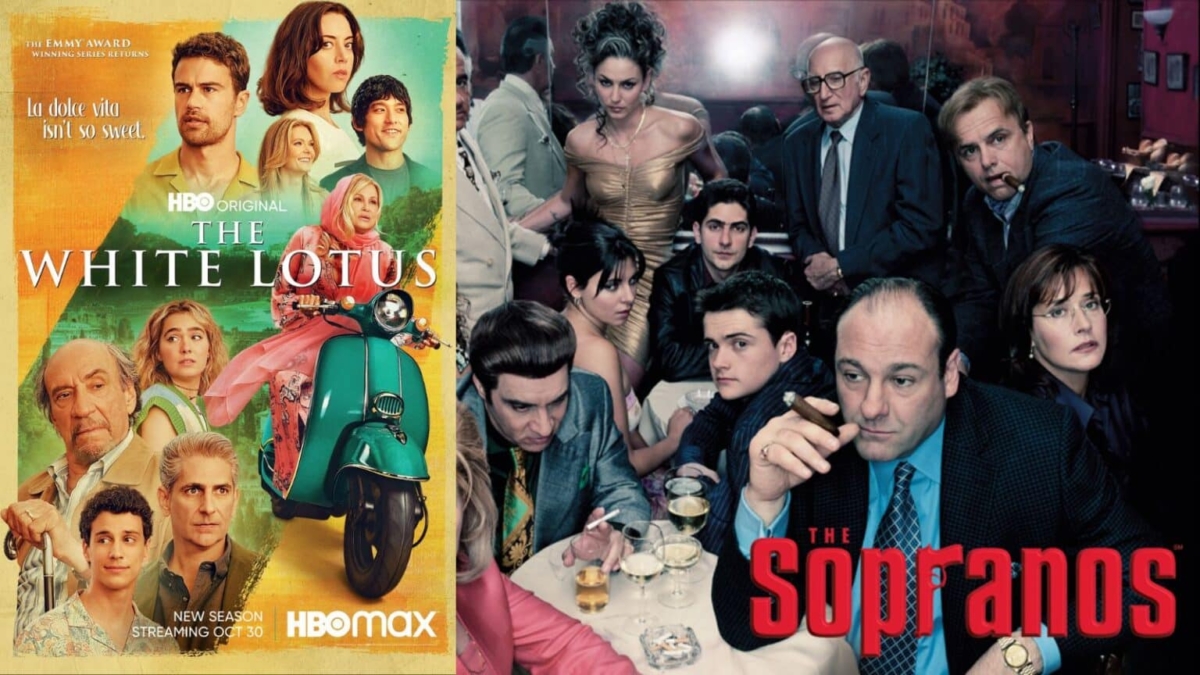
I genuinely cannot compliment these CTV owners enough. Their content isn’t just good television, it’s cultural infrastructure. Rivals, The White Lotus, Game of Thrones, Sopranos Adolescence, these aren’t shows people watch and forget. They’re talking points and create emotional allegiance to a platform in a way that traditional broadcasters have been struggling to replicate for some time now. That’s a remarkable achievement and I think it deserves to be said loudly.
On the audience side, one of the most interesting questions is whether viewers are even thinking about which service they’re clicking into, or whether they’re simply navigating through the Sky EPG or a smart TV home screen and landing on content. Increasingly, I think it’s the latter. Discovery is increasingly happening at the home screen, not at the platform level. Control over that real estate is becoming as valuable as the content itself. A prime example of this is Sky’s clever addition of Netflix and Disney+ to their subscription packages to keep people in their ecosystem.
The Future Isn’t Streaming vs TV
And are all audiences watching more CTV? Not uniformly, as it’s clear older audiences still skew linear and Live Sport remains the great anchor of scheduled TV. But the direction of travel is clear across virtually every demographic. Streaming is no longer an additive to TV viewing, for many households, it is TV viewing. With the likes of ITV and Channel 4 continually pushing audiences and reinvestment towards their streaming platforms, we are already seeing huge momentum in this direction.
We’re not in a streaming vs TV world anymore. We’re in a market converging at pace, where the winners will be those who combine scale, precision, cultural relevance, and position on the biggest screen in the house. The platforms doing that best right now aren’t killing TV, they’re showing us what it can become.